
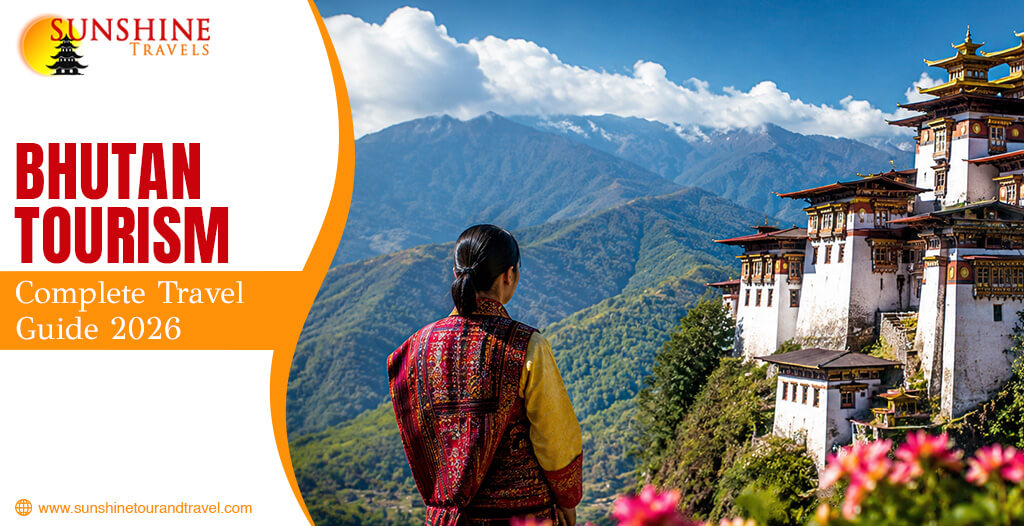
Bhutan Tourism: Complete Travel Guide 2026
Bhutan tourism in 2026 offers something rare, a Himalayan kingdom where ancient culture, clean mountain air, and intentional travel policy combine into one of Asia’s most unique experiences. Whether you’re planning your first trip or researching entry rules, costs, and top places to visit, this complete Bhutan travel guide covers everything you need to know before you go.
Ever wished to visit a country that measures happiness instead of GDP? That’s Bhutan.
A small kingdom nestled deep in the Eastern Himalayas – quiet valleys, ancient monasteries, prayer flags on every mountain pass. One of the few places on earth where tourism has not replaced tradition.
Why Make Bhutan a Place on Your Bucket List?
Bhutan is not a typical place. There are no tourist attractions here that are busy. No chaotic traffic. No rushed sightseeing.
You will find relaxing monasteries, friendly people, and mountains that will spread out as far as the eye can look; however, not that.
Bhutan’s tourism policy is built on high-value, low-impact travel. The government deliberately limits visitor numbers to protect culture, environment, and the quality of every traveler’s experience. The result is a trip that feels genuine – not manufactured.
This is why Bhutan tourism stands apart from every other Asian destination. You don’t experience Bhutan. You absorb it.
Entry Rules for Bhutan Tourists (2026)
Before you pack your bags, understand the entry rules. They’re straightforward once you know them.
Indian, Maldivian & Bangladeshi Citizens
- No visa required
- Entry with a valid Indian passport, Voter ID Card, or Aadhaar Card
- A Bhutan Entry Permit is mandatory – arranged through a licensed travel agent or at the immigration office in Phuentsholing
- Children under 18 should carry a school ID or birth certificate alongside a parent’s ID
All Other Nationalities
- A Bhutan visa is required – applied for through a licensed Bhutanese tour operator only
- Self-arranged visas through embassies are not available
- Your passport must be valid for at least 6 months beyond your return date
- Visa approval typically takes 3-5 working days
Key Rules for All Tourists
- All tourists must travel with a licensed local guide – this is non-negotiable and applies year-round
- Permits are required to travel beyond Phuentsholing into Thimphu, Paro, Punakha, and other regions
- Carry original ID documents at all times – checkpoints exist throughout Bhutan
Traveling from India? The easiest land entry point is Phuentsholing, directly connected to Jaigaon in West Bengal. Read our complete guide to visiting Bhutan from India.
Understanding the Sustainable Development Fee (SDF) in Bhutan
The Sustainable Development Fee is one of the most asked-about aspects of Bhutan tourism – and one of the most misunderstood.
What Is the SDF?
The SDF is a mandatory daily fee charged to every tourist visiting Bhutan. It directly funds healthcare, education, and environmental conservation programs across the country.
SDF Rates for 2026
|
Tourist Category |
SDF Rate |
|
Indian nationals |
₹1,200 per person per night |
|
International tourists |
USD 100 per person per night |
|
Children (5 years and under) |
Exempt |
|
Children (6–12 years) |
50% discount |
Top Places to Visit in Bhutan
Most first-time visitors cover three to four destinations in one trip. All are connected by road and easily managed within a 5-7 day itinerary.
Paro
Home to Taktsang Monastery (Tiger’s Nest) – Bhutan’s most iconic landmark, built on a 900-metre cliff face. Also worth visiting: Rinpung Dzong, the National Museum of Bhutan, Kyichu Lhakhang (one of Bhutan’s oldest temples), and the scenic Paro valley itself.
Thimphu
Bhutan’s capital city – and the only capital in the world with no traffic lights. Visit the Buddha Dordenma statue (51 metres tall), Tashichho Dzong, National Memorial Chorten, and the Thimphu Weekend Market. A city that balances traditional Bhutanese life with modern development in a way that feels completely natural.
Punakha
The former capital and home to Punakha Dzong – widely considered the most beautiful fortress in Bhutan, sitting at the confluence of the Pho Chhu and Mo Chhu rivers. Lower in altitude than Thimphu and Paro, making it warmer and accessible even in winter. Don’t miss Chimi Lhakhang, the temple of the Divine Madman.
Bumthang
The spiritual heartland of Bhutan. Home to some of the country’s oldest and most sacred temples, including Jambay Lhakhang and Kurjey Lhakhang. A quieter, slower, deeply atmospheric destination – best for travelers who want to go beyond the standard itinerary.
Phobjikha Valley
A glacial valley and one of Bhutan’s most pristine ecosystems. Every winter (October–February), rare Black-Necked Cranes migrate here from the Tibetan Plateau. Wide open meadows, a beautiful dzong, and almost no crowds.
The Heart of Bhutan's Identity
But Bhutan isn’t all about scenery. Bhutan culture and traditions are very much entrenched and part and parcel of life in Bhutan.
One of the major reasons for this is Buddhism. It can be seen in architecture, festivals, and daily activities.
Traditional dress is still prevalent. Men wear the gho, and women wear the kira, especially at festivals and official events.
The colorful mask dances and religious stories are integral to the local festivals, called Tsechus. If your holiday coincides with one of them, don’t miss it out!
In this place, you must respect local culture and that’s more than enough. When visiting religious sites, dress modestly. Always go around religious buildings anti-clockwise! Some of the little things mean a lot.
The people of the local area are typically friendly and hospitable to tourists who are interested and respectful.
What a Typical Package Includes?
Planning a Bhutan trip independently is complicated. Most travelers – and all international tourists – are required to book through a licensed operator. Here’s what a standard package typically covers:
|
Inclusion |
Standard Package |
|
Accommodation |
Yes |
|
All meals |
Yes (typically) |
|
Licensed guide |
Yes |
|
Private vehicle |
Yes |
|
SDF processing |
Yes |
|
Entry permits |
Yes |
|
Visa assistance |
Yes (international tourists) |
|
Flight bookings |
Usually separate |
|
Personal shopping |
Not included |
Smart Tips Before You Go
Just a few tips to remember before you leave.
These are some tips for your first trip to Bhutan.
- Use a licensed operator. An absolute must – advanced preparation!
- Pack layers. The weather is very variable from low to high.
- Have some local cash – in small denominations.
- Do not photograph at monasteries and temples without permission.
- Have travel documents within easy reach at all times on entry.
- Try local food. Don’t miss out on Ema datshi, Bhutan’s chili-cheese dish.
Once on the ground, small preparations can make a big difference!
Best Time to Visit Bhutan
The right time depends on what you’re looking for.
|
Season |
Months |
Highlights |
Temperature (Thimphu) |
|
Spring |
March – May |
Rhododendrons, Paro Tshechu |
10°C – 20°C |
|
Monsoon |
June – August |
Lush valleys, low prices, few crowds |
17°C – 25°C |
|
Autumn |
September – November |
Best mountain views, Thimphu Tshechu |
10°C – 22°C |
|
Winter |
December – February |
Quiet trails, lower costs, Punakha Tshechu |
2°C – 15°C |
Best overall months: October, November, March, and April offer the most reliable weather and the best festival experiences.
What's New in Bhutan Tourism 2026
Bhutan updates its travel policies annually. Here’s what’s relevant for 2026:
- The SDF for Indian nationals remains ₹1,200 per person per night as of 2026
- International tourist SDF remains at USD 100 per day
- Entry permit processing through Jaigaon-based agents continues to be the fastest land route option for travelers from West Bengal and Northeast India
- Bhutan continues its policy of requiring all tourists to travel with licensed guides – no independent travel beyond Phuentsholing
Frequently Asked Questions (FAQs)
Q1: Do Indian citizens need a visa for Bhutan?
Q2: Is the Sustainable Development Fee included in tour packages?
Q3: What is the Sustainable Development Fee for Indians visiting Bhutan in 2026?
Q4: What is the best time to visit Bhutan?
Q5: Can I travel to Bhutan without a tour operator?
Q6: What currency is used in Bhutan?
Final Thoughts
Bhutan isn’t just a destination. It’s an experience that stays with you long after you leave.
The mountains. The culture. The calm. Every part of this journey feels intentional – unlike rushed trips to more crowded destinations.
Sunshine Travels is based right on the Bhutan border in Jaigaon, West Bengal. We handle your permits, SDF, vehicles, guides, and accommodation – everything in one place, with local knowledge that no online booking platform can match.
Call Now – +91 8538833174
Free consultation. No commitment. Your Himalayan journey is closer than you think.